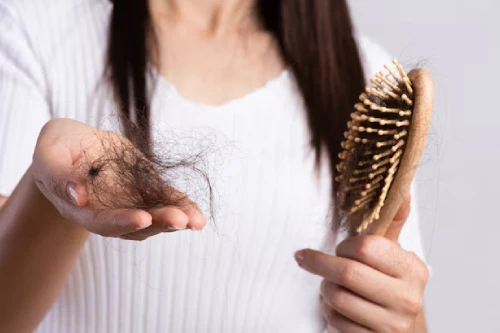
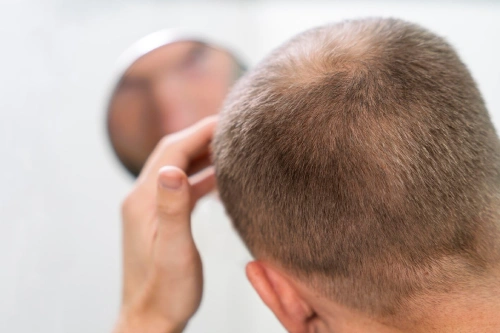
At some point, most people dealing with hair loss reach a crossroads.
They’ve tried changing shampoos. They’ve read advice online. Some have taken supplements, others have followed routines very strictly — yet the mirror still feels a little unfamiliar. That’s usually when the bigger question shows up: Should I consider a hair transplant, or are non-surgical treatments enough?
It’s not an easy decision, and it’s not supposed to be. Hair loss doesn’t follow a single pattern, and neither should its treatment. Choosing between surgical and non-surgical options isn’t about which is “better.” It’s about understanding what your hair actually needs — at this stage of your life.
First, Understand What’s Really Happening to Your Hair
Before choosing any treatment, dermatologists look at one thing very closely — whether the hair follicles are still alive.
This matters more than anything else.
If follicles are weak but present, they can often be revived.
If follicles are completely lost, no medicine or injection can bring them back.
This single factor usually decides the direction of treatment — and explains why two people with hair loss may need completely different solutions.
Non-Surgical Hair Treatments: When Hair Needs Support, Not Replacement
Non-surgical hair treatments are usually the first step — and for many people, they’re enough.
These treatments aim to slow hair fall, strengthen existing strands, improve scalp health, and stimulate dormant follicles. They do not create new hair, but they help preserve and thicken what’s still there.
Medical Hair Fall Control
Dermatologist-prescribed topical solutions and oral medications help stabilise excessive shedding. These treatments work best when hair loss is recent or actively progressing.
They’re especially useful for:
- Early-stage hair thinning
- Stress-induced hair fall
- Hormonal imbalance-related shedding
Consistency matters here more than speed.
P-R-P Therapy (Platelet Rich Plasma)
P-R-P employs the use of the growth factor contained in your own blood to stimulate the hair follicles. Injected into the scalp, it enhances the flow of blood and promotes robust hair growth.
P-R-P Therapy is recommended when:
- Hair density has decreased
- The hair strands appear thinner
- Shedding even with treatment
It is most effective for early and moderate hair loss and needs more than one treatment for desired results.
GFC (Growth Factor Concentrate) Therapy
GFC is a more advanced, refined version of growth factor treatment. It delivers concentrated growth factors directly to the scalp with minimal inflammation.
This treatment is often preferred for:
- Women experiencing diffuse thinning
- People with sensitive scalps
- Maintenance after P-R-P or transplant
Results tend to appear gradually but steadily, making it a popular choice for long-term care.
Scalp Treatments and Nutritional Correction
Sometimes hair fall isn’t about genetics at all.
Poor scalp health, dandruff, inflammation, iron deficiency, vitamin D deficiency, or thyroid imbalance can all affect hair growth. Correcting these issues often significantly reduces hair fall — sometimes without any advanced treatment at all.
This is why dermatologists insist on diagnosis before intervention.
When Non-Surgical Treatments Are Usually Enough
Non-surgical treatments are ideal if:
- Hair loss started recently
- Hairline is mostly intact
- Density is reduced but not absent
- Donor area is strong
- You’re looking for prevention and strengthening
In such cases, consistent medical care can slow or even stabilise hair loss for years.
Hair Transplant: When Restoration Is Needed
A hair transplant becomes relevant when follicles are no longer active.
If areas have become visibly thin or bald, no stimulation therapy can recreate follicles there. That’s when transplantation is considered.
Hair transplant works by relocating healthy follicles from the donor area (usually the back of the scalp) to thinning or bald regions.
These follicles retain their genetic resistance to hair fall — which is why results are permanent when done correctly.
Situations Where Hair Transplant Makes Sense
Dermatologists usually recommend transplant when:
- There is visible baldness
- Hairline has significantly receded
- Crown area has sparse coverage
- Hair loss has stabilised
- Donor area quality is good
It’s not about age — it’s about pattern and stability.
At Celestee Skin, Laser and Hair Clinic, hair transplants are planned only after assessing long-term hair loss progression. This ensures the results continue to look natural even years later.
What a Transplant Cannot Do
A hair transplant doesn’t stop future hair loss.
It replaces missing hair — but surrounding native hair may still thin over time. That’s why most dermatologists combine transplant with medical or growth therapies for maintenance.
Transplant and non-surgical treatments often work best together, not separately.
The Most Common Mistake People Make
Many people jump straight to transplant without treating active hair fall.
This leads to uneven density later.
Others delay too long, hoping medicines will regrow hair in areas where follicles are already gone.
Both situations can be avoided with timely dermatological evaluation.
Choosing correctly is less about urgency — and more about timing.
How the Right Choice Is Actually Made
Dermatologists typically assess:
- Hair loss pattern
- Stage of thinning
- Follicle viability
- Age and family history
- Lifestyle and stress levels
- Expectations
Based on this, treatment may involve:
- Only non-surgical therapies
- A combination of therapies
- Or transplant followed by maintenance
There is no single right answer — only the right sequence.
The Celestee Approach to Hair Restoration
At Celestee Skin, Laser and Hair Clinic, hair restoration is approached as a journey rather than a one-day solution.
Patients are directed genuinely – whether a patient actually requires a medical treatment, a growth therapy, a transplant, or only periodic observations. It reduces pointless operations and promotes patient confidence.
The attention is still on natural-looking results, healthy scalps, and sustainability rather than quick surface makeovers.
Concluding Thoughts
Deciding whether to opt for hair transplant surgery or other non-surgical hair restoration methods is not a matter of choosing between.
It’s about understanding where your hair stands today — and what it needs next.
Some journeys begin with strengthening.
Some require restoration.
Most require patience.
When decisions are guided by science, experience, and honest advice, hair loss stops feeling confusing — and starts feeling manageable.
And that, more than anything, is what good treatment should offer.