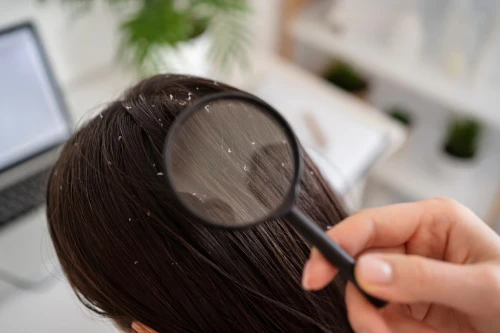
Dandruff is like the secret drama that everyone walks around on tippy-toes about until you notice the flaky white dots on the black shirt only minutes before heading out the door. Suddenly, it’s not just a secret, it’s visible to all and it’s about you.
What makes it so infuriating isn\’t the flakes themselves. It’s the feeling of knowing you\’re doing haircare the “right” way, but the condition still comes back. New hair care products, home solutions, oiling, then stopping the oiling; none of it stays in place.
The truth? Dandruff is just lurking around because it is “un-curable” due to minute day-by-day errors on our behalf that even we aren’t aware of.
So here are the most common mistakes made in treating dandruff—and what you should do instead.
Error #1: Blaming Dandruff on “Dry Scalp
This is the biggest misconception of all.
Many people assume flakes automatically mean dryness, so they:
- Oil their scalp more often
- Use ultra-moisturising shampoos
- Avoid washing their hair frequently
Dandruff can also result from an oily buildup, an overgrowth of yeast, inflammation, or the condition seborrheic dermatitis of the scalp. Just slather oil onto the problem and see what happens.
Instead,
First, identify what type of dandruff you\’re dealing with. Flaky, oily, itchy, red, and recurrent dandruff usually require specific maintenance beyond the need for moisture.
Error #2: Changing Antidandruff Shampoos Too Often
We are living in a time of instant gratification, but scalp care is not like that.
Common mistake: Using an antidandruff shampoo on a person who has:
Two washes in a week, then, switch because “it didn’t work.”
A medicated shampoo will take a minimum of 3-4 weeks to show any noticeable effects, in most cases.
What To Do Instead?
Pick one shampoo that has been prescribed or recommended by a dermatologist and stick to it. Consistency always wins over seeking shortcuts.
Error #3. Not allowing the shampoo to sit for a period of time after application on the scalp.
Surprisingly common.
Individuals apply the product, massage it for ten seconds, and then proceed. Medical shampoos do not act as regular shampoos; they require contact time.
What to do instead:
It should be massaged on to the scalp and then left on for 3 to 5 minutes. It’s meant to be a treatment. It’s not just meant to clean. Because of that, it’s definitely different. The consistency
Mistake #4: Overwashing or Underwashing Your Hair
Doing either of these can dry the hair or scalp.
It dries the scalp, causing the oil glands to go into hyperdrive.
\”Underwashing\” allows oil, sweat, and scale buildup.
People are alternating between extremes in hopes that one will remedy the situation.
What to do instead:
Stick to a balanced hair washing routine according to your scalp type. Normally, for the maximum number of dandruff-suffering scalps, it is recommended to wash the hair twice to thrice a week with the right hair shampoo.
Mistake#5: Applying Home Remedies Without Knowing The Scalp Skin
“Natural remedies” like lemon juice, curd, baking soda, aloe vera are all over the internet.
Some ingredients in these recipes may provide some relief in moderate conditions, but most random homemade remedies can cause irritation in the areas of the scalp and make the flaking condition worse by disrupting the natural
What to do Instead:
If you\’re a lover of natural remedies, you can utilize them with caution and in moderation, but never on your scalp if it’s inflamed, itchy, or broken. If your dandruff problem persists, you\’re better off seeing a professional rather than going the natural remedy route.
Error #6: Overlooking Itching, Redness, or Excess Hair Fall
“Just dandruff” often doesn’t make things worse.
However, if you experience itching, red spots, sensitivity on the scalp, or an unusual amount of hair shedding, it might be a sign of a scalp problem.
A common case that the Celestee Skin, Laser and Hair Clinic in Hyderabad sees includes those with severe cases of dandruff that they may have had for several years and assumed that it is normal.
What to do instead:
If there is recurring dandruff or an onset of hair issues related to it, it is better to consult a professional and avoid taking multiple remedies at home.
Error #7: Applying Styling Products on an Active Dandruff Scalp
Hair sprays, gels, serums, and dry shampoos all staying on your scalp for long periods of time can ruin it.
Applying styling products during a flare can clog pores in hair follicles, increase scaling, and exacerbate itch.
What to do instead:
Keeping your scalp clean and product-free is important when dealing with dandruff. First, take care of your scalp, not your hair, because hairstyling can wait.
Error #8: Quitting Medication as Soon as Flakes Stop Falling
It is from here that the dandruff quietly returns.
Most patients discontinue therapy once the flakes start diminishing and do not complete the course or transition to maintenance therapy.
What to do instead:
With the reduction of symptoms, a routine of occasional use of medicated shampoo, gentle washing, and appropriate scalp care products should be adopted.
Error #9: Stressing About It (Yes, Stress Matters)
Stress is not a causative agent of dandruff but can trigger outbreaks through oil secretion, immunity, and inflammation.
What to do instead:
Embrace a holistic hair care regime, including taking care of your scalp, getting adequate sleep, managing stress, and eating a balanced diet to promote healthy hair and skin.
When Should You Visit a Dermatologist?
If dandruff keeps coming back despite treatment, or is accompanied with redness or pain in the scalp, it needs professional care. Because these can not only affect your confidence or daily life, but significantly result in hair thinning.
When it comes to hair care at Celestee Skin, Laser and Hair Clinic, when it comes to the treatment of dandruff, it’s far from guessing. It’s science.