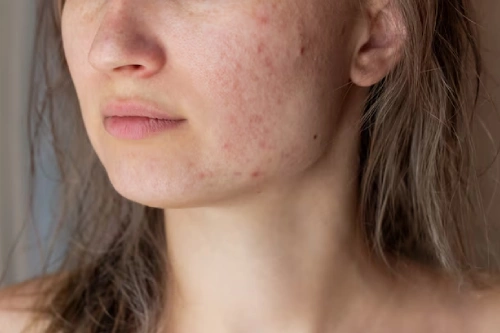
Acne usually leaves its marks quietly, but quite stubbornly.
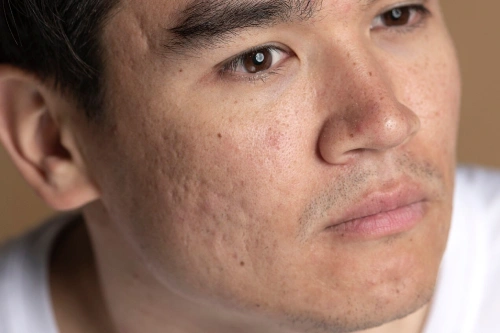
The pimples settle down, the inflammation fades, and life moves on. But sometimes, what stays behind feels harder to deal with — faint dents on the cheeks, uneven texture under makeup, or marks that catch the light differently in photos.
Acne scars don’t hurt. They don’t itch. But they sit there silently, reminding you of a phase you thought was over.
And in trying to fix them, many people end up damaging their skin further by using harsh peels, going for aggressive treatments, or quick-fix procedures without understanding what their skin actually needs.
Removing acne scars isn’t about erasing your skin.
It’s about repairing it — gently, intelligently, and in the right order.
First, Understand This: Not All Acne Scars Are the Same
One of the biggest reasons scar treatments fail is simple — people treat all scars alike.
But acne scars come in different forms:
- Ice-pick scars (deep and narrow)
- Box scars (sharp edges)
- Rolling scars (soft depressions)
- Post-acne marks (brown or red pigmentation, not true scars)
Each behaves differently. Each responds differently. And each needs a separate approach.
Trying to treat all of them with one solution usually leads to disappointment — or irritated skin.
Why Aggressive Treatments Often Backfire
Many people believe stronger means faster.
- Stronger peels.
- Deeper lasers.
- Higher settings.
But acne-scarred skin is already compromised. When pushed too hard, it responds with:
- Increased pigmentation
- Prolonged redness
- Skin barrier damage
- Sensitivity that lasts months
Dermatologists focus on controlled skin stimulation, not injury.
Real improvement comes from teaching the skin to rebuild collagen — not shocking it into reaction.
The Golden Rule of Scar Treatment
Before improving texture, the skin must be stable.
This means:
- Active acne must be under control
- Skin barrier must be healthy
- Pigmentation must be addressed first if present
Only then do scar treatments work safely and effectively.
This step alone prevents almost 70% of post-treatment complications.
Treatments That Remove Acne Scars Without Harming Skin
Let’s walk through the dermatologist-recommended options — and when each one actually makes sense.
1. Microneedling (For Mild to Moderate Scars)
Microneedling works by creating micro-channels in the skin, encouraging natural collagen production.
Best suited for:
- Rolling scars
- Uneven texture
- Early acne scarring
Sessions required: 4–6 sessions
Gap between sessions: 4 weeks
Why it’s safe:
It stimulates repair without removing skin layers. This mechanism makes it suitable even for Indian skin types.
Microneedling improves texture gradually — not overnight — but very naturally.
2. RF Microneedling (For Deeper Scars)
This combines microneedling with radiofrequency energy, reaching deeper skin layers.
Recommended when:
- Scars are deeper
- Regular microneedling gives limited improvement
- Skin needs tightening along with repair
Sessions required: 3–5
Downtime: Minimal (1–2 days of redness)
This treatment works beautifully when the goal is visible improvement without aggressive peeling or laser burn risk.
3. Chemical Peels (For Marks, Not Pits)
Chemical peels are excellent — when used correctly.
They are best for:
- Acne marks
- Uneven tone
- Pigmentation left behind after acne
They do NOT remove deep scars.
Mild to medium peels help renew the surface layer and even out skin tone.
Sessions required: 4–6
Frequency: Every 2–3 weeks
Used properly, peels enhance scar treatments — not replace them.
4. Laser Scar Treatments (Selective Use)
Laser is powerful — but only when used thoughtfully.
Best for:
- Mixed scars
- Texture irregularities
- Stubborn scars not responding to other treatments
Dermatologists often use fractional lasers that stimulate collagen without removing the entire skin layer.
Sessions required: 2–4
Downtime: Depends on depth
Laser is never the first step — it’s usually the second or third.
5. Subcision (For Tethered Scars)
Some scars are pulled downward by fibrous bands beneath the skin.
No peel or laser can fix this unless the scar is released.
Subcision gently breaks these bands, allowing the skin to rise naturally.
Often combined with:
- Microneedling
- RF
- PRP
Sessions required: 1–3 depending on depth
This is one of the most effective treatments for depressed scars — when done by experienced hands.
6. P-R-P Therapy (Skin Healing Support)
P-R-P is not a scar-removal treatment on its own — but it enhances healing significantly.
It:
- Speeds recovery
- Improves collagen response
- Reduces post-treatment pigmentation
Often combined with microneedling or subcision for better results.
Choosing the Right Treatment — Based on Your Skin
Here’s the truth dermatologists share quietly:
- Marks only? → Peels + skincare
- Mild texture? → Microneedling
- Deep scars? → RF microneedling + subcision
- Mixed scars? → Combination approach
- Sensitive skin? → Slow, staged treatments
There is no “best” treatment — only the right sequence.
Why Combination Treatments Work Better
Acne scars sit at different skin depths.
That’s why dermatologists rarely rely on a single method.
A well-planned combination:
- Treats surface texture
- Repairs deeper damage
- Prevents pigmentation
- Preserves skin health
At Celestee Skin, Laser and Hair Clinic, scar treatments are planned gradually — allowing the skin to heal, respond, and rebuild naturally rather than forcing instant results.
What You Should Never Do
To protect your skin, avoid:
- DIY scar tools
- Strong acids without supervision
- Frequent laser sessions
- Over-exfoliation
- Skipping sunscreen post-procedure
Scar healing is slow — but rushing it causes more harm than benefit.
The Truth About Acne Scar Removal
Acne scars don’t disappear in one session.
- They soften.
- They smooth.
- They improve — layer by layer.
The goal isn’t perfection. It’s confidence without makeup filters. It’s skin that looks healthier, calmer, and more even in real life.
With the right approach, acne scars can improve beautifully — without thinning your skin, damaging your barrier, or creating new problems.
Because good skin treatment doesn’t fight your skin, it works with it.