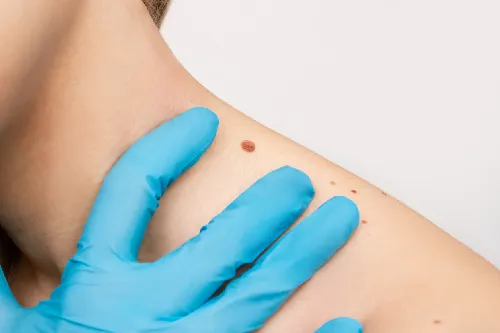
A mole is a tiny, pigmented, smooth-edged, round, or oval spot on the skin that can range in color from skin color to pink/red or brown/black. It can be flat or raised and feel soft or rough. Almost everyone has a mole, appearing anywhere on their body. On an average, 10 to 40 moles can develop somewhere on the skin because of genetics, hormonal changes, sun exposure, or certain medical conditions.
Moles are generally harmless skin growths but if their appearance or feel changes, they may turn out to be malignant, leading to melanoma- a skin cancer. Therefore, if the mole is showing unusual changes, affecting appearance, causing discomfort, or has become cancerous, then mole removal treatment in Hyderabad is the only solution. Skin mole removal can be done in different ways, depending on the size, location, and whether or not the mole is cancerous. A dermatologist can suggest the best, appropriate mole removal method.
Concerned about your mole? Continue reading this blog to learn everything you should know about mole removal.
What is Mole Removal?
A skin mole removal is a quick, outpatient, dermatological procedure to get rid of unwanted moles/sfrom the skin. One may undertake black mole removal for cosmetic reasons or go for mole removal if the mole shows early signs of cancer or is causing great physical discomfort.
Types of Moles and Why They Are Removed
Based on appearance and occurrence, there are various types of moles, including:
1.Congenital moles– These are the moles that are present at birth and can cover a large part of the skin.
2. Acquired moles– These are the common moles that appear following birth.
3. Atypical moles (Dysplastic nevi)– These moles look unusual in shape, size, texture, and color. They are larger than typical moles, are more than one color, and increase the risk of melanoma.
4. Cosmetic moles– These include moles that affect one’s appearance. The types include-
- Intradermal nevi (Flesh-colored, smooth, hairy, or warty moles)
- Blue nevi (Bluish-gray, flat or raised moles)
- Halo nevi (Moles with a surrounding ring of depigmented skin)
- Spitz nevi (Raised, pink, red, blue, or black moles)
- Compound nevi (Light to dark brown moles with slight or significant elevation).
Mole removal is usually done for atypical moles that can develop anywhere on the skin of the face, arms, legs, neck, or torso. A dermatologist may cut out the mole and do a biopsy test to confirm whether the mole is precancerous or cancerous. In some cases, mole removal may serve as a curative skin cancer treatment.
Otherwise, a dermatologist may recommend a black mole removal if one is bothered by the mole\’s appearance or location.
How to Remove Moles: Different Methods
Mole removal treatment in Hyderabad is executed by dermatologists, usually with either of the two main approaches:
- Shave excision– A dermatologist uses a single- or double-bladed razor to shave off the mole and level out the surrounding skin. To improve the scar following mole excision, the area may be slightly cauterized. The procedure can provide a tissue sample for further analysis but can’t help check out for skin cancer type. It is a common technique by which a mole is more likely to return.
- Surgical excision– A dermatologist first cleans and numbs the mole-affected skin and then with the help of a scalpel separates the mole from the remaining skin. A margin of healthy skin is even taken out to make sure all atypical mole cells are removed. Thereafter, a dermatologist uses forceps to take hold of the segment and lift away the mole. To stop bleeding and prevent scarring, a dermatologist may apply pressure or cauterize the area, and finally suture back the treated skin. This is a very common method by which mole is less likely to re-develop.
Laser Mole Removal: A Modern Solution
Laser treatment for mole removal is a non-surgical approach for mole removal on the face. It is usually preferred to remove small or medium-sized, flat, and brown/black, benign moles for aesthetic reasons.
A laser mole removal works by causing thermal breakdown of the melanin within the mole. The fragmented pigments are later eliminated from the skin through the body’s natural processes. Finally, the moles fade and the skin gets clear of it.
Mole Removal on the Face: Special Considerations
Before heading for a skin mole removal on the face, it is important to speak to a dermatologist to get the mole evaluated and know the best removal method. Furthermore, it is advised to have a proper understanding of the suggested mole removal option and learn about aftercare. Any cosmetic products must not be applied over the mole before the treatment. This way, the procedure of mole removal on the face is ensured to be safe and effective and there is minimal risk of scarring and infection.
Aftercare and Recovery
The time of recovery from mole removal depends on the size and location of the removed mole, the chosen mole removal method, and the general health of an individual. Generally, the patient can expect 2-3 weeks of healing time. During the recovery period, the patient can perform daily activities but may have sore skin.
For quick and smooth recovery and to avoid infection, the patient must follow mole removal aftercare as directed by a dermatologist.
The post-treatment care instructions include:
- Practice proper wound care, like keeping the treated area clean, moist, and covered. Make sure to change wound dressing.
- Sun-protect the treated area.
- Avoid picking the scab.
- To minimize scarring, apply scar creams.
Risks and Complications
The safety of mole removal depends on who is performing the procedure. When a dermatologist is executing mole removal in the office, it’s low-risk. However, just like any other treatment, there are certain risks.
The potential mole removal risks or complications of mole removal include:
- Scarring
- Bleeding
- Infection
- Recurrence of mole
- Pigment changes
- Pain and discomfort
- Nerve damage.
Get Rid of Unwanted Mole Today!
If you have a suspicious mole or mole that is cosmetically or physically bothersome, it’s advised to go for a safe mole removal. A dermatologist can best help one enjoy mole removal benefits by choosing the right mole removal method. So, take charge and avoid delaying seeing a dermatologist near you for mole removal.
FAQs on Mole Removal
Is Mole Removal Painful?
No. Dermatologists use topical anesthesia or injectable lidocaine to avoid pain or discomfort during mole removal. However, after a few days of getting the mole removed, one can expect a stinging or burning sensation in the treated area.
How Long Does It Take to Heal After Mole Removal?
Usually, it takes 2-3 weeks for the area to heal following mole removal. The exact healing time depends on the mole size, the wound location, and the general health of the patient.
Can Moles Be Removed Safely at Home?
Some home remedies claim to get rid of moles. It is advised to talk to a dermatologist before trying out any home remedy. Mole removal is safer when done by a dermatologist.
Will Mole Removal Leave a Scar?
Yes, scarring is one of the risks of mole removal. The scar may or may not be hidden. Its extent depends on the location and size of the mole, the method used to remove the mole, the patient’s skin type and age, and the aftercare followed.
If one is looking for a good mole removal clinic in Hyderabad, they can get in touch with experts at Celestee Skin, Hair and Laser Clinic. They have advanced technology for all types of mole removal; Visit now for more details!