Hair transplant has long been known as a genuine way to get natural hair restored in thinning or balding areas of the scalp. As hair loss is a common complaint amongst many men and women, many of them are turning to hair transplant surgery. If you too intend to get a hair transplant in Hyderabad done, it’s essential to have a complete understanding of the hair transplant process so that you know what to expect during your transformative journey to achieve a fuller head of healthy hair.
Here at the Celestee Skin, Hair and Laser Clinic, we appoint top-notch hair transplant surgeons who offer affordable, advanced hair transplants. After talking to them, we have come up with this blog which compiles a hair transplant step-by-step journey guide. Read on to gain valuable insights into how transplant is done and then make a well-informed decision.
Step 1: Initial Consultation and Evaluation
During the first meeting with a qualified and experienced hair transplant doctor in Hyderabad at the clinic, here’s what to expect:
- Evaluation of the donor site for the potential to generate hair grafts
- Assessment of the unique needs and goals and suitability for hair transplant
- A detailed scalp examination and analysis of hair health
- Review of medical records and any individual factors impacting hair loss
- Discussion regarding the suitable hair transplant technique
- An open-ended discussion about hair transplant
- Clinical pictures of the recipient areas
- Setting realistic expectations.
At the end of the consultation, the surgeon creates and shares a tailored hair transplant plan, ensuring the best possible results.
Before undergoing a hair transplant, it’s essential to follow the surgeon’s clear instructions on preparation for a hair transplant. This includes avoiding medications that can cause blood thinning, ensuring hair’s proper health and hygiene, and making lifestyle modifications.
To confirm the schedule for the hair transplant surgery in Hyderabad, some pre-operative evaluations may be necessary, like:
- Routine blood tests- to check for infections and overall well-being
- Scalp analysis- to ensure proper hair grafting conditions
- A comprehensive physical examination- to check fitness for the surgery.
Step 2: Planning the Hairline and Graft Count
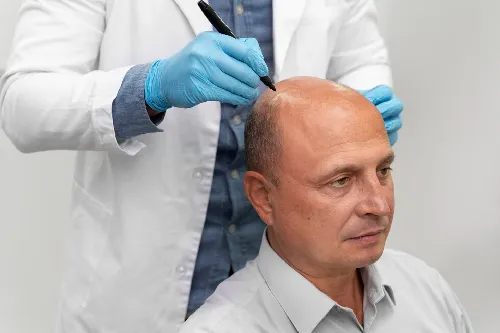
After the surgeon has assessed the individual’s hair loss pattern and donor area, the surgeon will work with the individual to carefully design a natural-looking, new hairline. For planning the hairline, the surgeon takes into consideration the individual’s age, facial features, and hair type.
The next step undertaken by the surgeon is counting the grafts required to create the planned hairline. The factors which influence the number of grafts needed include the stage of hair loss on the Norwood Scale, the size and shape of the area needing hair restoration, the desired hair density (number of hair follicles per square centimetre), and the health/density of donor area.
Step 3: Extraction (FUE/FUT)
Now, the pain-free hair transplant surgery will commence. The surgeon first numbs the donor and recipient areas and then harvests the hair follicles using a suitable technique, based on the stage of hair loss and the individual’s preferences.
In the Follicular Unit Transplantation (FUT), the surgeon first makes a long, linear incision at the back of the scalp, where D-HT hormone-resistant hair grows, to remove a strip of skin-bearing hair. The strip is then dissected under the microscope to separate the individual hair follicles. This technique is also known as the strip method.
In the Follicular Unit Extraction (FUE), the surgeon directly extracts the individual hair follicles from the back or side of the scalp using a micro-punch device.
Step 4: Graft Preparation and Counting
The surgical team works to carefully separate and prepare the extracted hair follicles for transplant. This involves trimming off any excess tissue and sorting the grafts based on their quality and size. The prepared grafts are counted and then kept in a sterile solution to maintain their viability until the recipient site is ready for implantation.
Step 5: Recipient Area Preparation and Implantation of Hair Follicles
The surgeon creates tiny, multiple incisions at the balding or thinning areas of the head. These incisions are made of size and angle as the direction and pattern of existing, natural hair growth. Once the recipient site is ready, the surgeon uses precision, skills, and artistry to place the prepared grafts one by one. Nowadays, hair follicles can be quickly and best implanted with a special implantation tool- a pen-like device.
Immediate Aftercare Instructions
After the hair transplant surgery, the surgeon provides detailed post-operative guidelines which must be diligently followed to ensure swift recovery and the best final results.
Just after the surgery, the patient is asked to:
- Take adequate rest
- Sleep with head elevated
- Take prescribed medications only
- Avoid strenuous activities
- Stay hydrated and eat well
- Avoid smoking and alcohol
- Avoid irritating and damaging the placed grafts
- Keep the scalp clean and protected from direct sunlight and outside pressure.
What to Expect in the First Week?
In the initial 3 days, mild discomfort, redness, and swelling are usually reported. By the second half of the first week, scabs start forming and dries. At the end of the week, most scabs wither off and there is some redness and tenderness.
Final Outcomes
The first few weeks of recovery are marked with shock hair loss, meaning the transplanted hair falls out, which is normal. The transplanted hair follicles start growing new hair in 3-6 months and by about a year, the desired hair density is achieved.
FAQs on Hair Transplantation
How long does the procedure take?
Typically, it takes 4 to 8 hours to get a hair transplant done. The exact length of the surgery is decided by the method of hair transplant, the number of grafts to be transplanted, the surgeon’s experience/expertise, and the specific case of the patient.
Is a hair transplant done in one sitting?
Some patients get satisfactory results from a single session of a hair transplant while others need multiple sittings to restore desired hair density. The number of sittings that are required is influenced by the extent of baldness, desired hair density, the hair loss pattern/progression, and the hair transplant technique employed.
Do I feel pain during the procedure?
The whole procedure is a comfortable experience. The only brief sensation which will be experienced is that of a needle pricking the skin to administer anaesthesia. However, post-procedure when the effect of anaesthesia wears off, there is some discomfort or tenderness, manageable with painkillers.
What anaesthesia is used?
Hair transplant surgery is executed under the effect of local anaesthesia which numbs the scalp while the patient remains conscious.
What happens immediately after?
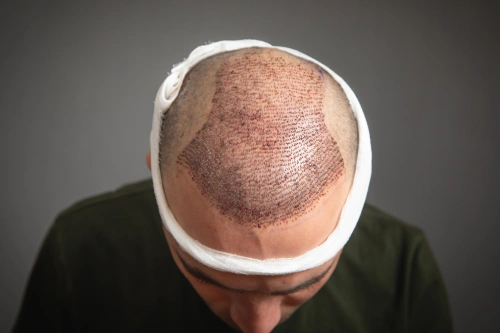
Just after getting a hair transplant, the operated areas may appear swollen, and red, and start forming scabs. The patient may experience tightness or mild discomfort. As the effect of anaesthesia wears off, a tingling or burning sensation may be experienced. The patient will have to wear sterile dressings and pressure bandages and follow the surgeon’s recommended aftercare instructions.
Can I go home the same day?
Most hair transplants are carried out on an outpatient basis, meaning the patient can return home on the same day of the surgery. However, it is recommended to rest for 24 hours, allow the treated area to settle, get the first dressing applied, and then travel, if the home is too far from the surgical facility.
Hyderabad is a well-renowned hub for hair transplants, and there has been a significant rise in hair transplants in recent years. With advanced surgical settings and skilled surgeons, Hyderabad is a top destination for individuals looking for the best hair transplant services. For further details meet hair transplant surgeon in Hyderabad at Celestee Skin, Hair and Laser Clinic.