The majority of people across the globe face skin inflammation at some point in their lives. Skin inflammation indicates the immune system\’s response to some infection, allergy, or dysfunction/ disease/underlying medical condition.
In this blog, skin inflammation is discussed in detail. Read on to learn about symptoms, causes, and skin inflammation treatment in Hyderabad suggested by dermatologists at Celestee Skin, Hair and Laser Clinic.
What is Skin Inflammation?
Skin inflammation, medically termed dermatitis, refers to the skin that is irritated by a foreign invader or underlying illness. Based on the duration for which the skin remains inflamed and the varying signs, there are two types of skin inflammation- acute and chronic.
Acute skin inflammation develops within a short period and does not result in permanent tissue damage but chronic inflammation takes longer to present itself and can be due to continued immune system response.
What Are the Signs of Skin Inflammation?
Skin can get inflamed all of a sudden or over time. Given below are some of the symptoms of skin inflammation:
- Cracked or raw areas of the affected skin, that may bleed with or without scratching
- A skin rash that may be flat or raised; burn, itch, or sting; and be scaly, or smooth
- Pimple breakouts or formation of blisters
- Skin thickening in the affected area
- Warmth felt in the affected area
- Skin tautness
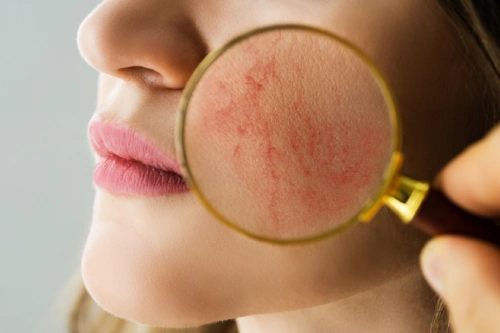
- Skin redness
- Swelling.
One must seek dermatologist attention at the earliest if having a rash:
- all of a sudden and rapidly covering larger areas of the body
- with oozing pus, red streak, and swelling (signs of infection)
- anaphylaxis (severe allergic reaction)
- spreading rashes all over the body
- accompanied by fever
- which is painful
- with blisters.
Causes of Skin Inflammation
The immune system plays a crucial role in maintaining the general well-being of an individual. If anything goes haywire in the body, the immune system starts working to get everything normalized. Immune system response is seen as skin inflammation on exposure to an allergen, infectious microbe/foreign invader, an irritant (like poison released by insect bite), or heat/light which causes damage to the skin’s natural barrier. Overactive immune responses can lead to different skin inflammatory conditions like acne, contact dermatitis, eczema, psoriasis, and rosacea.
Sometimes, the immune system mistakenly launches an attack on healthy skin cells and causes skin inflammation. That’s the case of autoimmune conditions like psoriasis, systemic lupus erythematosus, pemphigoid, and dermatomyositis. An internal health issue like a gut problem and genetic make-up can also contribute to skin inflammation.
Here\’s how the immune system works in causing inflammation:
- Subsequently, the inflammatory cells release a variety of substances that cause dilation of blood vessels and increased permeability. Thus, the immune system response reaches the affected area
- Sometimes, the chemicals released by the cells lead to leakage of fluids into the tissues, resulting in swelling underneath the skin
- The immune system responds to the stimulus by releasing inflammatory cells
- There is an increase in blood circulation resulting in warmth and redness.
Treatment Options for Skin Inflammation
To relieve skin inflammation, the first thing that needs to be done is to identify the cause and type of skin inflammation. There are different treatments available. For allergy-induced inflammation, one should avoid its trigger. A dermatologist works with the person having inflamed skin to create a personalized, best treatment plan.
1. Topical treatments– The products that are recommended to be directly applied to the inflamed skin include:
- Corticosteroid creams- Corticosteroids mimic co-rtisol hormone that helps suppress the overactive immune system, thereby relieving inflammation. Hyd-rocorti-sone is a steroid that helps reduce the skin’s itch by calming down the immune system.
- Calc-ineurin inhibitors- These are a class of immunomodulators that work to block calcin-eurin- a protein involved in the activation of T cells of the immune system, thus suppressing the immune system.
- Antifungal/Antibacterials- Depending on the type of skin infection causing inflammation, topical medicine is provided. Antifungal is used for inhibiting the growth of fungus while antibacterial is used for inhibiting bacterial growth, thereby reducing inflammation.
- Calamine lotion- Calamine (zinc carbonate) is intended for relieving skin itching, pain, or discomfort, protecting the skin barrier, and even drying out oozing/weeping skin.
2. Systemic medications– These are to be taken only with a doctor’s prescription. The drugs recommended for oral/injectable use to relieve severe skin inflammation:
- Antihistamines- for allergic reactions
- Oral antibiotics- for bacterial infections
- Antifungal tablets- for fungal infections
- Oral/injectable retin-oids, methotre-xate, or biologics- for psoriasis.
Get Treatment Today!
Skin inflammation is an outcome of an immune response. It could have many potential causes like immune system dysfunction, infection, or allergic reaction. The most obvious sign of skin inflammation is a rash that may itch, be red, feel warm, or have a blister.
An inflamed skin can stay for a few weeks (acute inflammation) or months (chronic inflammation). Once the cause and type of the skin inflammation are diagnosed by a dermatologist, one can receive a suitable treatment.
A variety of topical and oral remedies are available besides the home remedies to manage the symptoms. It’s advised to identify and avoid the inflammation triggers and maintain a good skincare regime and healthy lifestyle.
FAQs on Skin Inflammation
Are there any home remedies to reduce skin inflammation?
Yes, try to soothe skin inflammation with cool compresses, oatmeal/Epsom salt baths, aloe vera gel, manuka honey, or coconut/tea tree oil.
How is skin inflammation diagnosed?
A dermatologist identifies the cause of skin inflammation by conducting a thorough skin examination, noting down the symptoms, and reviewing the patient’s medical records. To rule out other possibilities, some routine blood tests, allergy testing, or skin biopsy may also be performed.
How long does skin inflammation last?
Skin inflammation can be acute or chronic. Acute skin inflammation presents around a few hours to weeks and may resolve within 6 weeks. Chronic skin inflammation persists beyond 6 weeks.
What happens if skin inflammation is left untreated?
There is a risk of serious complications like scarring, infection, and even life-threatening systemic infection or inflammation including cellulitis or sepsis.
How to quickly reduce skin inflammation?
Go ahead with at-home remedies and promptly seek dermatologist attention if the inflammation is severe or persistent.
For details on skin inflammation treatment in Hyderabad and to achieve a healthy skin, visit now at Celestee Skin, Hair and Laser Clinic.