Forehead Pigmentation: Causes & Most Effective Treatments
Have you ever noticed dark patches or uneven skin tone appearing on your forehead and wondered where they came from? You might not have had them a few months ago, but slowly the skin starts looking darker, patchy, or slightly uneven. For many people, this can feel frustrating because the forehead is one of the most visible areas of the face.
Forehead pigmentation is, in fact, a very common skin problem. Any person, male or female, young or aged, may suffer from forehead pigmentation. The good news is that in most cases, forehead pigmentation is easily manageable and treatable if the cause of the problem is well understood.
It is, of course, important to understand why forehead pigmentation occurs and what works best for it, rather than using any and every cream and remedy available for the problem.
Let’s understand the reasons for forehead pigmentation and then look for the best solutions for it.
What Exactly Is Forehead Pigmentation?
Pigmentation is the darkening of certain areas of the skin due to the production of extra amounts of melanin. Melanin is the natural skin pigment responsible for the color of our skin, hair, and eye color.
The production of extra amounts of melanin in certain areas of the skin results in dark spots or patches.
The pigmentation on the forehead may take the form of:
- Light brown or dark brown patches
- Uneven skin tone
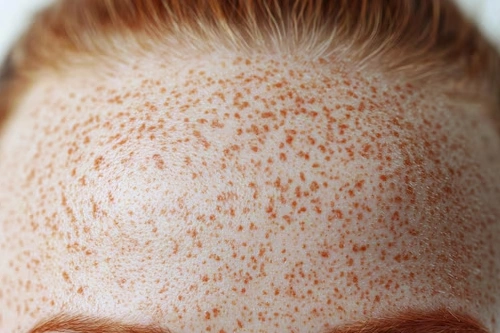
- Freckle-like spots
- Darkening of the forehead
It may also occur slowly and may become more noticeable with time.
Common Causes of Forehead Pigmentation
Pigmentation does not occur on its own, and it is important to understand the cause of forehead pigmentation in order to apply the appropriate remedy.
1. Sun Exposure
One of the biggest causes of forehead pigmentation is sun exposure.
The forehead is constantly exposed to sunlight, especially when we step outdoors without sun protection. Ultraviolet (UV) rays stimulate melanin production as the skin tries to protect itself.
Over time, repeated sun exposure can lead to:
- Sun spots
- Uneven tanning
- Patchy pigmentation
This is why pigmentation often appears more prominently on the forehead, nose, and cheeks.
2. Melasma
Melasma is a common skin problem characterized by the development of symmetrical dark skin patches, mostly on the forehead, cheeks, and upper lip of the face.
It is usually caused by:
- Hormonal changes
- Pregnancy
- Birth control pills
- Sun exposure
Melasma develops as patches rather than small spots, and sometimes it is hard to treat, necessitating professional intervention for noticeable improvement.
3. Post-Inflammatory Hyperpigmentation
Sometimes pigmentation develops after the skin has gone through inflammation or irritation.
This is called post-inflammatory hyperpigmentation and can happen after:
- Acne breakouts
- Skin irritation
- Allergic reactions
- Harsh skincare products
When the skin heals, it may leave behind darker patches on the affected area.
4. Hormonal Changes
Hormones play a significant role in skin health. Changes in hormonal balance can trigger excess melanin production.
This is why pigmentation is sometimes seen during:
- Pregnancy
- Menopause
- Hormonal disorders
Hormonal pigmentation often appears gradually and may become darker with sun exposure.
5. Aging and Skin Damage
As the skin ages, sun damage and skin renewal may cause uneven skin pigmentation.
You may see changes such as:
- Dark spots
- Uneven skin tone
- Dull skin tone on your forehead
All of these are natural skin changes, and with proper skin care, you can improve your skin’s appearance.
Most Effective Treatments for Forehead Pigmentation
The best treatment for your skin depends on the extent and type of skin pigmentation you are experiencing. Treatments from dermatologists are more effective than over-the-counter products, as they penetrate deeper into the skin.
Here are some of the most effective options.
1. Chemical Peels
It is also commonly used for the treatment of skin pigmentation and skin tone irregularities.
During a chemical peel, a chemical solution is carefully applied to the skin, and the outer skin layer is gently peeled off, resulting in the elimination of damaged skin cells and the promotion of new skin cell growth.
Chemical peels can help improve:
- Mild pigmentation
- Sun damage
- Dullness
- Uneven skin tone
After a few sessions, many people notice that the skin appears brighter and more even.
2. Laser Skin Toning
One of the most effective treatments for addressing pigmentation, especially melasma, is laser toning.
Laser toning works by targeting the melanin in the skin, which is then broken down into smaller particles that can be easily removed from the body through natural means.
Laser toning also has the advantage of stimulating the production of collagen in the body, which improves the texture of the skin.
Laser toning is one of the most recommended procedures in advanced dermatology clinics, such as Celestee Skin and Hair Clinic.
3. Medical Skincare Treatments
Dermatology-grade skincare products can also play an important role in improving pigmentation.
These may include ingredients such as:
- Vitamin C
- Retinoids
- Kojic acid
- Azelaic acid
- Niacinamide
These ingredients help regulate melanin production and gradually lighten dark patches.
However, it’s important to use them under professional guidance to avoid irritation or overuse.
4. Microneedling With Brightening Serums
Another procedure that could help with pigmentation and skin quality is microneedling.
It is a procedure that uses tiny needles to create micro-channels in the skin. This allows the penetration of active ingredients into the skin to stimulate repair.
When combined with brightening serums, microneedling can help improve:
- Skin texture
- Pigmentation
- Dullness
Over time, the skin becomes smoother and more evenly toned.
5. Sun Protection and Maintenance
No pigmentation treatment can work effectively without proper sun protection.
Sun exposure can worsen existing pigmentation and trigger new spots.
That’s why dermatologists always emphasize:
- Using a broad-spectrum sunscreen daily
- Reapplying sunscreen when outdoors
- Wearing hats or sunglasses when possible
Consistent sun protection helps maintain the results of professional treatments.
At places like Celestee Skin and Hair Clinic, treatment plans usually combine procedures with skincare and sun protection to achieve long-term improvement.
The Takeaway
Forehead pigmentation is a common issue, but it doesn\’t have to be a permanent one. Forehead pigmentation often results from various causes, including sun exposure, hormonal changes, skin inflammation, and aging.
The secret to treating pigmentation effectively is to understand the reason behind it and the best way to tackle it. Professional treatments, such as chemical peeling, laser toning, and medical skincare, can make a huge difference in skin tone when paired with sun protection.
Good skin with an even tone is definitely achievable, but it doesn\’t happen overnight. At times, the skin just needs a little assistance to regain its original radiance.