Have you been noticing bald patches and spots on your head? Are patches appearing to be progressing? Well, this could be a sign of a common hair loss disease called alopecia areata. The condition is typically harmless but can have negative psychological effects such as depression, anxiety, social withdrawal, etc. Providentially, the disease can be managed with a dermatologist\’s help. If you are also struggling with the same, Celestee Clinic for skin, hair and laser has got your back! The clinic is renowned for offering the best and most effective Alopecia areata treatment in Hyderabad.
What is Alopecia Areata?
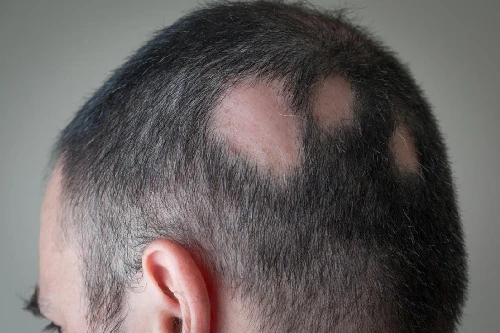
Alopecia Areata is an autoimmune disease that causes hair loss in spots or patches. Thus, the condition is also commonly referred to as patchy hair loss. As the disease progresses, two or more patches can join and may affect a larger area. In severe cases, the condition may progress and affect eyebrows, legs, eyelashes, arms, nails, etc.
Now, depending upon the degree of hair loss, the condition can be categorised into several types, namely:
- Patchy Alopecia Areata: As the name suggests, this type of alopecia can be identified by oval or circular patches, known as the most common type of Alopecia Areata. The patches are one or more of coin-sized patches, usually onset on the scalp, but it may progress on other body parts as well.
- Diffuse Alopecia Areata: It is a rare form of hair loss in which an individual experiences diffused hair thinning instead of clear patches.
- Alopecia Areata Totalis: This condition is a severe form of alopecia and can be characterized by complete baldness. Individuals with this condition experience total hair loss on the scalp only. They may still have hair on their eyebrows, armpit and other body parts.
- Alopecia Areata Universalis: This is the most advanced form of hair loss in which the suffering individual experiences hair loss all over the body.
- Ophiasis Alopecia Areata: In this hair loss condition, the suffering individual loses hair in a band or wave-like pattern. It usually affects the occipital, temporal, and parietal regions of the head. In layman’s terms, it affects only the back or sides of the head.
Alopecia Areata Symptoms
The signs and symptoms of Alopecia Areata differ according to their type. However, an individual typically starts showing Alopecia Areata symptoms in their late 20s or 30s. The most significant sign of this hair loss is the onset of a few hair patches of a few centimeters. Now, it may progress gradually or rapidly.
Other signs may include:
- The surrounding skin of hair patches may appear smooth, with no redness or itching.
- Tiny dents, bumps or spots on nails. This is also known as nail pitting.
- Some individuals might experience itching right before the hair falls out.
- In some cases, individuals might experience “exclamation points.\” These points are referred to as short, broken hair, present at the edge of the bald patches.
- The hair thinning, especially at the top of the head, may be sudden or gradual.
Alopecia Areata Causes
Depending upon the type of alopecia, there are different causes of hair loss. The most prominent cause is immunosenescence. Therefore, it is an autoimmune disease. The consolidate cause is hair follicles being attacked by immune cells, resulting in hair loss. This happens because the immune cells think of hair follicles as foreign invaders and try to eliminate them. The immune system’s response causes inflammation, resulting in hair follicles prematurely entering the resting phase and eventually falling out.
Now, the exact reason what triggers the immune cells to attack hair follicles is still unknown. However, there are certain factors that might trigger the immune system to attack hair follicles; these include:
- Family history of hair loss.
- Certain genes, such as HLA complex (human leukocyte antigen), AR gene, etc.
- High-stress levels or traumatic incidents.
- Certain health conditions like Down syndrome, vitiligo, thyroid disease, etc.
- Nutritional deficiencies may not directly trigger the immune system, but they can impact or worsen the condition.
Alopecia Areata Treatment
If you are struggling with such a pattern of hair loss and exhausted with the options, then Celestee Skin, Hair and Laser Clinic is your ultimate bet. The expert dermatologist at the clinic offers a targeted and effective Alopecia Areata treatment in Hyderabad. Their unique treatment approach focuses on identifying the type and cause of alopecia, followed by carefully crafting a personalised treatment regime. This approach controls hair loss and aids in hair regrowth. The clinic offers the best treatments for Alopecia Areata. However, some trials are required to figure out the option that would work best in treating the condition.
Some of the common treatment options available for alopecia areata are as follows :
- Topical medications: These include mino-xidil, anth-ralin, cortices-teroid, and diphe-ncyprone. These treatments work by inducing new hair growth. However, the treatment needs to be followed on a consistent routine to achieve optimum results. The results can be experienced and usually appear in a few months.
- Steroid Injections: Steroid injections are an optimal option for mild patchy hair loss. Corticosteroids can help grow new hair but do not control or manage ongoing hair loss. The treatment is given once or twice a month.
- Oral Medications: The oral medication includes cortisone tablets. These tables are JAK inhibitors that work by reducing inflammation. Moreover, oral medication also includes immunosuppressants that work by blocking the response of the immune system, thereby allowing hair to grow back.
- Phototherapy or laser therapy: In phototherapy, light of a specific wavelength is focused onto the bald areas to boost new hair growth.
Hair Regrowth in Alopecia Areata
While talking about hair regrowth in alopecia areata patients it generally takes about a few months. However, in severe or advanced cases, hair regrowth might take up to a year. The new hair that grows initially appears white/grey and gradually, over time, restores natural colour and texture.
The potential Alopecia Areata treatment options include topical, oral, injectable corticosteroid, phototherapy, minoxidil, or topical immunotherapy. To know which treatment option suits you best, consult with an alopecia areata doctor in Hyderabad today! For more information, schedule a visit at Celestee Clinic for skin, hair and laser!
Alopecia Areata in Specific Areas
Alopecia areata predominantly affects the scalp, but as the disease progresses, it can affect other body parts as well. Such as face, back, chest, arms, and legs. Moreover, in men, the disease affects the beard and moustache as well. In addition to that, in severe cases, the condition tends to affect nails.
How I Cured My Alopecia Areata: Real-Life Stories
Fortunately, with leading hair doctors at Celestee Skin, Hair and Laser Clinic, alopecia areata can be successfully managed or reversed.
Experts at Celestee Skin, Hair and Laser Clinic have helped countless patients feel confident back again and improve their general wellness with effective treatment plan.
Check our clients ‘personal stories of Alopecia Areata recovery’.


FAQs on Alopecia Areata Treatment
What is Alopecia Areata?
Alopecia areata is an autoimmune disease associated with hair loss. The disease can be identified as hair loss in small patches. It generally affects the scalp, but it may progress and affect other body parts as well.
What Causes Alopecia Areata?
Alopecia areata is an autoimmune disease caused when the immune cells recognise hair follicles as foreign entities and attack them. Now, the exact reason what triggers the immune system to attack hair follicles is still unknown. The potential causes are environmental factors or genetic makeup.
What are the Best Treatments for Alopecia Areata?
The best treatment for Alopecia areata depends upon its type and cause. A dermatologist carefully evaluates the type and cause of alopecia and suggests the best treatment option. Some effective treatment options include immunosuppressants, supplements, steroid injections, light therapy, etc.
Can Alopecia Areata Affect Nails?
Yes, alopecia is known to affect nails as well. Individuals suffering from AA might experience ridges, pits, dents, bumps, brittleness, etc.
How Long Does Hair Regrowth Take in Alopecia Areata?
With proper treatment, hair typically grows back within a few months. In some cases, it might take up to a year.
Talk With An Expert Today!
Alopecia is an autoimmune disease that commonly affects the scalp. The hair loss appears to be patchy, in an oval or circular shape. If ignored, the disease may progress and can affect different parts of the body, such as arms, legs, beards, eyebrows, moustaches, etc. with the right dermatologist’s help, the condition can be managed with several treatment options.
Your search for the right and reliable dermatologist for managing alopecia areata ends with Celestee Clinic for skin, hair, and laser. Get the best and most effective alopecia areata treatment with seasoned and compassionate professionals.
Celestee Skin, Hair and Laser Clinic is well equipped with the dynamic and most advanced technologies that will ensure the latest treatment option without straining your budget. To restore your crown and replenish your self-esteem, request an appointment today! Let the journey to the confident you begin today!