Losing hair permanently at the front or sides of the scalp and sometimes even eyebrows is very saddening. Hair loss can intensify over time, with the most extreme cases resulting in complete loss of hair growth in the affected areas. That’s the case of frontal fibrosing alopecia. Thankfully, it’s manageable with a variety of dermatologist-recommended alopecia treatments in Hyderabad.
In this read, learn more about frontal fibrosing alopecia, including its causes, symptoms, diagnosis, and treatment.
What exactly is Frontal Fibrosing Alopecia?
Frontal fibrosing alopecia, medically abbreviated as FFA, is a type of alopecia featuring patterned scarring of hair follicles, typically along the hair margin at the front of the head. In some cases, hair loss is even visible on the sides of the scalp near the ears and on the eyebrows.
Factors Contributing to Frontal Fibrosing Alopecia
To date, researchers have not identified a definitive cause of frontal fibrosing alopecia. However, it’s suspected that the condition is likely to be caused or triggered by:
- Autoimmune disease – It occurs when the immune system attacks the healthy hair follicles, resulting in inflammation and scarring of the scalp. FFA is considered to be a variant of lichen planopilaris due to its resemblance to many forms of lichen planus and their histology.
- Genetics and environment – FFA cases have been found to run in families and can be triggered by sun exposure, viral infections, certain medications, regular use of sunscreens, the use of fragrances, and exposure to pollutants.
- Hormones– FFA is mostly seen after menopause, stating a link to hormonal change.
- Surgeries– FFA can be a side effect of facelifts or hair transplants.
Signs of Having Frontal Fibrosing Alopecia
- Flat, hyperpigmentation patches (dark brown or grey colored) on the face and neck
- Skin-colored or yellow, small bumps near the hairline or on the scalp and face
- Loss of facial hair, arms or leg hair, underarm hair, or pubic hair (less common)
- Progressive hair loss at the front and sides of the hairline
- Affected areas of skin turning pale, scarred, or shiny
- Pruritus/itchy skin or pain in affected areas
- Large forehead veins
- Loss of eyebrow
- Rosacea.
Diagnosis of Frontal Fibrosing Alopecia
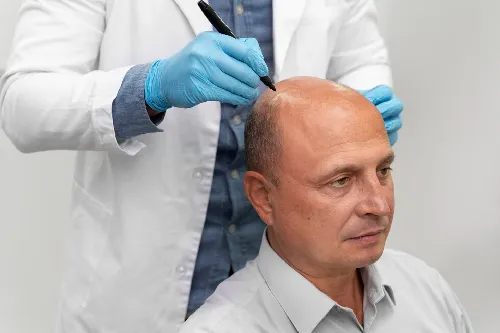
To begin, the individual exhibiting signs of frontal fibrosing alopecia will need to consult with a certified dermatologist to review their medical history, medication intake, and symptoms.
The dermatologist will conduct a thorough physical examination to closely examine the scalp, hairline, and eyebrows. If FFA is suspected, the dermatologist may perform a skin/bump biopsy test and a hair pull test to rule out other possible types of hair loss, such as androgenic alopecia (pattern baldness) and traction alopecia (a hair-pulling disorder).
Treatment Options for Frontal Fibrosing Alopecia
Frontal fibrosing alopecia treatments in Hyderabad can help slow down the worsening of the condition. The suggested treatments include:
- Combination of medications– This includes anti-inflammatory antibiotics to reduce the inflammation; corticosteroid to reduce inflammation (best suited for eyebrow hair loss); calcineurin inhibitors to suppress overactive immune system and calm inflammation.
Oral fina-steride to prevent further hair loss; hydrox-ychloro-quine to reduce pain or itchiness and even help grow hair when taken in early stages. Topical min-oxidil to treat hair loss. - Laser therapy – Low-level laser therapy can be used to reduce swelling and itchiness in the affected areas, potentially reducing scarring, and stimulate hair follicles to grow thicker hair by increasing blood circulation to the affected area.
An excimer laser (with a 308 nm wavelength) can also help reduce inflammation, redness, and itching by modulating the inflammatory process. It can even boost hair regrowth. - P-RP hair therapy– Injection of growth factors derived from the patient’s blood plate-lets after centrifugation of blood can help promote hair growth and reduce inflammation, thereby helping manage FFA in some cases.
- Hair Grafts/Transplants– This is recommended for growing hair in affected areas when the progression of FFA has been slowed, the condition has stabilized, and the patient has been in remission for a minimum of 2 years.
The surgery involves relocating healthy hair follicles from the back of the scalp to the front and sides of the scalp, as well as the eyebrows, where hair follicles have been lost.
FAQs on Frontal Fibrosing Alopecia
Who is at high risk of frontal fibrosing alopecia?
Frontal fibrosing alopecia most often affects postmenopausal women, rosacea sufferers, hypothyroidism, rheumatoid arthritis, lupus erythematosus, and type 2 diabetes patients, and those with a family history of the same condition.
How many years does frontal fibrosing alopecia last?
Frontal fibrosing alopecia has an unpredictable clinical course, and its duration varies based on the age at onset and other underlying conditions. Mostly, the condition lasts for several years.
Can hair grow back from frontal fibrosing alopecia?
Frontal fibrosing alopecia is a type of scarring hair loss. As it causes scarring damage to hair follicles, these follicles become incapable of growing hair back.
How soon after treatment for frontal fibrosing alopecia are the results noticeable?
The progression of hair loss may start to slow down within 6-18 months. The exact time taken depends on the treatment undertaken.
Can I avoid frontal fibrosing alopecia?
No. There is a better chance of slowing the progression of frontal fibrosing alopecia or regrowing hair by seeking early treatment when it has just started.
How to self-care when living with frontal fibrosing alopecia?
Firstly, take early medical intervention. Avoid natural, home remedies for hair loss and the use of heat hair styling tools. Wear your hair in style or accessorize with items like hats or headbands to conceal affected areas.
Adjust to the condition by meeting patients with the same type of hair loss and joining a patient support group. Practice a good haircare routine and lead a healthy lifestyle, which includes a nutritious diet, abstaining from smoking, and getting sufficient sleep.
Are there new treatments for frontal fibrosing alopecia?
Yes, JAK inhibitors can modulate the immune system by blocking the Janus Kinase enzymes that take part in inflammation and immune responses. They can help halt the progression of FFA and even promote hair regrowth.
If one is experiencing frontal fibrosing alopecia, an experienced dermatologist can help manage it. At Celestee Skin, Hair and Laser Clinic, hair loss experts and dermatologists provide modern and tailored frontal fibrosing alopecia treatment in Hyderabad.
The approach they use is to first identify the root cause and then provide the treatment. Book a visit with them to manage any type of hair loss or balding concern.