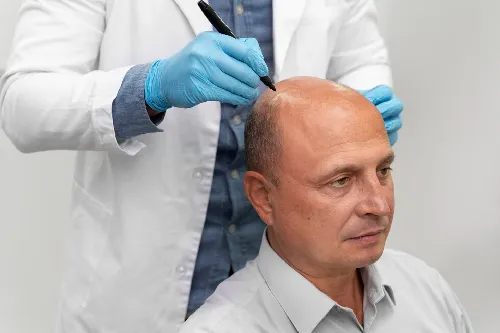
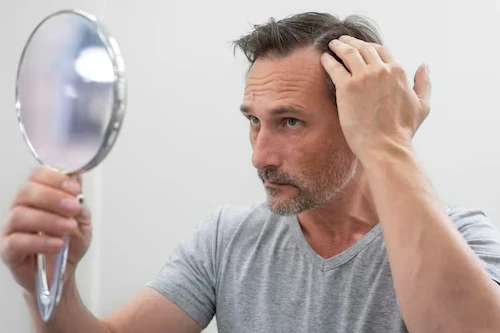
Usually, when people think of hair transplantation, they have their minds fixed on what they want to achieve in the transplantation spot – the hairline, the top, the density, and how natural it will look. Behind every successful hair transplantation procedure, however, there is a hero silently playing a very important part, and it is called the donor area.
Your donor area is an equally important factor in how good your end results will be. Having a good donor area with healthy hair will not only cause your transplanted hair to grow better, but it will also make the hair in your lower and side regions look good.
At Celestee Skin, Laser, and Hair Clinic, hair transplantation is considered a long-term process, not a single-day event. Henceforth, donor site treatment before, during, and after transplantation holds immense significance.
Let’s now understand what really constitutes a donor site, and how important this part is, and how taking good care of it at the right time can make all the difference.
What Exactly Is the Donor Area?
The donor site is generally referred to as the location in which your hair grows from which healthy hair follicles are extracted for transplanting. In most cases, this takes place at the rear side of your head where your hair is less prone to falling under normal circumstances.
Such follicles are described as ‘permanent’ because they keep their resilience against balding even when they are transplanted into a balding region. In short, if your donor hair is of poor quality, your transplanted hair will not be of good quality either.
A healthy donor area implies:
- Strong Hair Follicles
- Good density
- Minimal visible thinning following extraction
- Better survival of transplanted grafts
Therefore, it is important for an experienced clinic such as Celestee Clinic to focus not just on planning and gentle hair extraction but also on maintaining the donor area, which is equally important to achieve a natural hairline.
Importance of Skin Care at the Donor Site
Your donor hair is limited.
After removing a follicle, it won\’t grow back in the donor area.
Poor donor management may result in:
- Thinning in a patchy manner at the back or sides of the head
- Scarring
- Poor graft survival
- Limited options for future hair restoration
On the other hand, taking good care of the donor site will help in ensuring the following:
- Proper car healing
- Natural-looking density
- Little scarring
- Improving hair health in the long term
Therefore, donor care is not just focused on recovery but is linked to your future hair.
Care of Donor Area Timeline
Pre-Harvesting
Before Hair Transplant Surgery: Preparing the Recipient Area
Being gentle with the donor area starts before the procedure.
Do’s
- Maintain good cleanliness of your scalp
- Let your physician know if you have any scalp problems such as dandruff or infection
- Follow any pre-procedure instructions
- Keep your diet healthy because a healthy diet promotes a healthy head of hair
Dont’s
- Oils and thick styling products aren\’t used before this procedure
- Do not smoke and drink alcohol for a few days before the operation
- Do not scratch or rub your scalp
At Celestee Clinic, the donor area is evaluated before the procedure to ensure equal follicles are removed safely.
Immediately Following the Procedure: First 7 Days
This is the most sensitive phase for the donor area.
What to Expect:
- Redness
- Small scabs
- Slight soreness or tightness
These are all absolutely normal, temporary reactions.
Do’s
- Following hair washing directions exactly as recommended
- Use only prescribed shampoos and medicines
- Sleep on your side or with your head slightly elevated
- Keep the area clean and dry
Don\’ts
- Avoid touching, scratching, or rubbing in the donor site
- Refrain from direct exposure to the sun
- Do not wear tight helmets or caps
- Refrain from heavy work
Gentle handling during this phase helps the donor area heal smoothly and reduces the risk of scarring.
Weeks 2 to 4: Healing & Recovery
At this stage, most of the scabs would have come off on their own, and the redness would have begun to lessen.
Do’s
- Resume gentle hair washing
- Moisturize your scalp if advised
- Hydrate and eat healthy foods
- Continue any supplements recommended
Do’s
- Do not use aggressive massage or scrubbing
- Do not panic if you see some light shedding. It is normal.
- Chemical treatment or hair coloring
This stage is all about patience. The skin donor area may still have a slight sensitivity, but the healing process is in full swing.
1 to 3 Months: Strengthening the Donor area
At this point, the donor site will appear largely normal.
Do’s
- Follow up with your clinic if advised
- Keep your scalp clean
- Protect your scalp from direct sun exposure
- Continue healthy lifestyle practices
Dont\’s
Refrain from using experimental hair products without proven effectiveness.
Redness or itching shouldn\’t be ignored; see your doctor.
Proper aftercare during this time is important in ensuring good density and texture in the donor area.
Long-Term Care of the Donor Area: Beyond Recovery
Taking care of the donor area does not end when the healing is over.
For long-term scalp health:
- Refrain from using too much heat on
- Use gentle shampoos
- Manage stress levels
- Follow a protein diet
- Consider maintenance treatments if suggested
Celestee Clinic is a facility majoring in holistic hair treatment. This means not only hair regrowth but hair health conservation over the years.
Common Mistakes That Can Hurt The Donor Area
Unknowingly, most people do these which affect the donor site in the following ways:
- Forcefully scratching scabs
- Skipping follow-up appointments
- Exposure to harsh hair products at an early age
- Not following post-procedure instructions
- Rushing into workouts without proper recovery
To keep your donor area safe, you need to avoid these common errors.
Why Expert Handling Matters
The achievement of donor site healing is greatly influenced by:
- Experience of the medical team
- Quality of instruments used
- Precision during extraction
- Personalised aftercare guidance
One such clinic is Celestee Skin, Laser and Hair Clinic, popular for advanced procedures, skilled staffers, and patient-centric focus, which gives equal importance to both the donor site and the receiver site.
Final Thoughts: The Donor Area Is Your Hair Transplant’s Foundation
A good hair transplant is not just about how good your hairline is, but your scalp’s health viewed from all angles matters too. The donor area is where your hair transplant begins. If this area is taken good care of, your transplanted hair will heal wonderfully and grow thick and healthy.
If you follow the proper course of care, adhere to do’s and don’ts, and put your faith in an expert clinic such as Celestee Clinic, you will give your hair transplant the best chance to change your appearance – not just in the short term but even in years to come.
Because when your donor area remains healthy, your confidence will boost automatically.