Hives, medically referred to as urticaria, is a common skin complaint affecting any part of the skin, regardless of age, gender, race, or ethnicity. The condition features raised, itchy, red welts, usually due to an allergic response. It is not a serious medical condition and sometimes resolves on its own. However, persistent or severe hives warrant a dermatologist\’s attention. In this guide, hives treatment doctors in Hyderabad discuss everything about hives. Including when to seek medical attention and treatments available for hives. The treatment depends on the cause or trigger and the symptoms associated with the hives.
Causes of Hives in Adults
Hives commonly occur in adults due to an allergic reaction. The common allergic triggers for hives are:
- Certain foods like eggs, chocolate, fruits, shellfish, milk, peanuts, tree nuts, soy, and wheat
- Certain underlying medical conditions like lupus, vasculitis, and thyroid disease
- Certain chemicals exposure
- Insect bites and stings
- Animal fur
- Latex or Nickel
- Parasites
- Skin scratching
- Certain medications
- Allergy shots
- Pollen.
The other potential causes of hives are:
- Pressure on the skin caused by prolonged sitting, wearing of a tight waistband, or heavy weight carried on the shoulder
- Infections including cold or bacterial and fungal infections
- Change in temperature- sudden hot or cold
- Stress
- Exercise
- Sunlight exposure
- Water or alcohol
- Vibration.
Note: In some cases, hives appear without a known cause.
Signs of Hives in Adults
Hives may occur within a few minutes of exposure to a trigger or may develop after more than 2 hours of exposure as a delayed response to the trigger. The symptoms can present anywhere on the body, including inside of the mouth and throat.
The symptoms of hives in adults include:
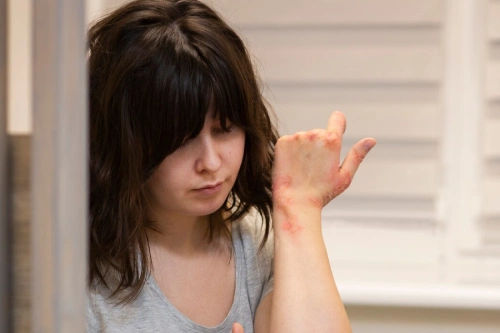
- Wheals: These are slightly raised, pink or red welts of varying sizes, ranging from a pen tip to a dinner plate, that develop either alone or in clusters, covering large areas. On brown and black skin, the rashes are harder to spot.
- Itching: This can be mild to severe. In severe cases, a stinging or burning sensation may occur.
- Inflammation: The swelling usually subsides in one site within 24 hours but develops in another spot.
- Angioedema: This is a medical emergency characterized by swelling that occurs deep under the skin, resulting in swelling of the eyelids and lips.
When Should Adults Seek Dermatologist Attention for Hives?
Adults should get their affected skin checked without delay when:
- Severe symptoms show up like dizziness, trouble breathing, throat swelling, or any sign of an anaphylaxis reaction
- Their welts last longer than 24 hours or hives are persistent for more than 6 weeks
- There is angioedema- swelling under the skin
- Over-the-counter products are not effective
- There is a high fever and unwell feeling
- The rash is spreading or is recurring.
Dermatologist-Recommended Treatments for Hives in Adults
The treatment for the hives is decided based on the extent of the condition or the duration of the symptoms. First, one should identify triggers and avoid episodes of hives. For relief from itchy and inflamed rash, take a cool bath or shower and apply cool compresses as needed. Applying cala-mine lotion and wearing loose, cotton clothes can also help minimize skin irritation.
Here’s how hives are treated in adults:
- Antihistamines– Over-the-counter or prescription antihistamines are used to relieve itching and inflammation associated with hives.
- Corticosteroids – When used for short-term, corticosteroids can help reduce inflammation by suppressing the immune system\’s function. Prescription corticosteroids help manage severe cases of hives.
- Other medications, such as da-psone (an antibiotic), are used to relieve swelling and redness. Monoclonal antibodies are given in case of chronic idiopathic urticaria. An epinephrine (adrenaline hormone) shot is administered in cases of severe hives and itching to divert blood away from the skin. Certain antidepressants may be used to relieve itching.
Complications Caused by Untreated Hives
People who experience severe acute allergic reactions can suffer from life-threatening conditions. This includes swelling in the airways of the throat and lungs. The condition is called anaphylaxis and can cause the airways to close.
Anaphylaxis can also be caused by severe allergic reactions triggered by eating certain foods, such as nuts, or after a bee sting. If one has anaphylaxis, one needs a quick shot of epinephrine.
When epinephrine is injected, it helps to open the airway. It also raises one\’s blood pressure and helps manage hives and swelling. If one takes epinephrine outside, then after taking it, one should visit a hospital or clinic to be monitored. Also, the symptoms of anaphylaxis can come back when the epinephrine wears off.
FAQs on Hives
Are hives contagious?
No. Hives can’t spread from one person to another.
Does scratching spread hives?
Scratching a hives rash may spread the skin inflammation, resulting in infection and even scars. So, it must be avoided.
How long do hives last in adults?
Hives can disappear within 24 hours but when old hives fade, new areas of the skin may develop hives. Cases of acute hives often last for a few days to a few weeks, while chronic hives can persist for 6 weeks or longer.
What can be mistaken for hives?
A hives rash is similar to a rash produced by heat exposure, eczema, or contact dermatitis.
What happens if hives are left untreated?
Some cases of hives are mild and can naturally resolve over time. Still, leaving hives unattended may cause complications, especially if it results in a severe allergic reaction. Acute hives may develop into chronic hives.
Is there a permanent cure for hives?
Hives treatment aims to keep affected skin clear. Chronic hives may eventually subside within a year.
Can hives be avoided?
Not always. Hives develop due to some trigger that causes more histamine and other chemicals to be released onto the skin. Patients can learn about what triggers their hives and prevent their hives from flaring up.
How can adults treat their hives fast?
Adults with hives should identify and avoid triggers, keep the rash cool and protected from the sun, practice good hygiene, and wear loose, comfortable clothing.
Additionally, one can consult a dermatologist at Celestee Skin, Hair and Laser Clinic as soon as possible for the best, quickest, and to receive the best hives treatment in Hyderabad.