Scalp psoriasis and dandruff are two familiar dermatological complaints affecting the scalp skin. Many people get confused with one for the other because of their overlapping symptoms. If you are wondering what your symptoms indicate, it’s crucial to understand how the two conditions differ. Identifying them correctly can let you receive appropriate treatment. In this piece, we have listed what the best dermatologist in Hyderabad has to say about scalp psoriasis and dandruff and how they differ from each other. This will help one spot the condition promptly and seek early treatment.
Scalp Psoriasis Vs Dandruff- Decoding the Differences
To understand how scalp psoriasis is different from dandruff, we will be comparing the clinical presentations, causes and triggers, diagnosis, and treatment of two scalp conditions.
What Are They?
Psoriasis is a chronic, autoimmune disorder, characterized by rapid growth of skin cells and their build-up on the skin surface. Scalp skin is the high-impact site of psoriasis. It causes significant discomfort and distress.
On the other side, Dandruff, also known as Seborrheic Dermatitis, is a symptom of a fungal scalp condition. It is characterized by white, flaky skin- indicating the shedding of the skin cell debris.
The Key Features
Here are the indicators that can help differentiate between Scalp Psoriasis and Dandruff:
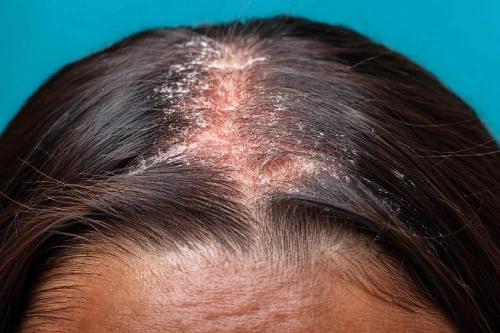
- Flakes/Scales– In scalp psoriasis, thick, silvery scales develop on the scalp. The elimination of these scales is challenging. If one forcefully tries to remove the scales, the scales may bleed. On the other hand, dandruff flakes are white and dry and easy to remove from the scalp.
- Itching– Those with scalp psoriasis tend to experience intense itching, often with a burning sensation, for a long time. On the flip side, dandruff itchiness is mild and doesn’t stay long.
- Redness– Scalp psoriasis patients present well-defined, inflamed, red patches with or without silvery-white scales on the scalp skin. Whereas, patients with dandruff have no significant scalp redness.
- Affected areas– Those affected with severe scalp psoriasis will also show signs on other areas like ears, forehead, and neck while dandruff stays only on the scalp. Scalp psoriasis follows the Koebner Phenomenon where new patches develop at the site of injury or trauma to the skin. Furthermore, the nails of a psoriasis patient also get affected. There could be nail pitting, discoloration, or even separation.
Causes and Triggers
The exact cause of both scalp psoriasis and dandruff remains unknown. However, there are some beliefs about their occurrence.
Scalp psoriasis occurs when the healthy skin cells (keratinocytes) are mistakenly attacked by the person’s immune cells, causing them to rapidly multiply and pile up on the skin\’s surface.
Genetic predisposition, immune system dysfunction, and environmental factors like infections, stress, trauma, and certain drugs are believed to cause, trigger, or exacerbate scalp psoriasis flare-ups.
On the flip side, dandruff is believed to be caused by overactive sebaceous glands on the scalp skin contributing to a conducive environment for yeast-like fungus, Malassezia overgrowth. In some, it is the result of dry scalp skin.
Treatment Options- Scalp Psoriasis and Dandruff
Scalp psoriasis treatment aims for retarding the proliferation of skin cells, reducing the skin inflammation, and alleviation of symptoms.
Scalp psoriasis treatment in Hyderabad options include:
- Topical calcineurin inhibitors- They help suppress the activity of the immune system and reduce the skin’s inflammation and itchiness.
- Topical reti-noids- They particularly work to promote skin cell turnover, reducing inflammation, and scaling.
- Topical corticosteroids- It works to reduce skin inflammation and irritation.
- Phototherapy- Controlled UV exposure of the psoriasis-affected areas, from sunlight or artificial sources, can slow down the rapid skin cell growth.
Dandruff treatment in Hyderabad by dermatologist at Celestee Skin, Hair and Laser Clinic focuses on wiping out Malassezia– the causative fungus, from the scalp or hydrating the scalp skin. The treatment options include:
- Topical or oral antifungals- They help kill or inhibit the growth of Malassezia.
- Personal Hygiene- It helps prevent Malassezia overgrowth.
- Lifestyle modifications- It helps keep the scalp skin hydrated and non-conducive for Malassezia growth.
Seek Help From Expert.
Scalp psoriasis can be easily confused with dandruff due to its similar clinical presentation. Thankfully, various diagnostic approaches are available with a dermatologist to distinguish between scalp psoriasis and dandruff accurately.
If you\’re unsure about your scalp condition, seek the best dermatologist\’s opinion at Celestee Skin, Hair, and Laser Clinic. During your consultation, the dermatologist will conduct a clinical examination, a microscopic examination, and various laboratory tests to facilitate an accurate diagnosis.
Based on your examination and test reports, dermatologists provide the appropriate treatment and help improve your scalp health.
FAQs on Dandruff and Scalp Psoriasis
Can scalp psoriasis and dandruff occur simultaneously?
Yes, psoriasis and dandruff can often co-occur on the scalp. In that case, one would experience white and silvery flakes, scaling, and itchiness. This occurs when psoriasis has compromised the skin barrier, making it susceptible to fungal infections and causing dandruff. Sometimes, a fungal scalp infection can trigger a psoriasis flare-up in those who have experienced it earlier.
Are home remedies effective for scalp psoriasis and dandruff?
Yes. Some home remedies can help manage symptoms of both conditions, but they cannot be a substitute for dermatologist-recommended treatment. Getting the proper medical treatment is necessary.
How can I confirm whether I have scalp psoriasis or dandruff?
Based on the appearance of the scalp, symptoms, and the severity of the scalp condition, with the help of a dermatologist, one can confirm the presence of scalp psoriasis or dandruff.
When should I visit a dermatologist for scalp psoriasis or dandruff?
Do not delay in seeing a dermatologist if experiencing persistent or worsening symptoms, signs of infection, and failure of over-the-counter treatments.
Can scalp psoriasis and dandruff be treated with the same approach?
No, as both conditions are different, their treatments will vary based on the symptoms. Generally, scalp psoriasis requires a comprehensive, tailored treatment approach, whereas dandruff is often manageable with over-the-counter products and lifestyle modifications.
Celestee Skin, Hair, and Laser Clinic features the best dandruff and psoriasis treatment doctors in Hyderabad, who can help ensure your scalp\’s optimal health. From advanced diagnostics to ensuring a healthy scalp, consult them to manage the issues with their expertise and advanced dermatological care. Consult for details.