Down with a viral infection where skin shows unusual growths? It’s most likely to be warts. Warts are a common skin complaint, especially in childhood. Estimates suggest that one in five children aged between 12 to 16 years are commonly affected with warts. 65% of warts do not need treatment and resolve over time while some warts are bothersome and require treatment from a skin doctor. One can consult the skin doctor at Celestee Skin, Hair, and Laser Clinic who can determine the best wart treatment in Hyderabad. However, prevention of infection in the first place is better than seeking viral warts treatment.
This blog talks about warts, their types, diagnosis, treatment, recovery, and prevention. By understanding the warts types and available treatment options, one can make a well-informed decision regarding skin warts treatment.
What Are Warts?
Warts are benign growths that develop on the skin and mucosal lining of the mouth. These are caused by an infection of Human Papillomavirus (HPV), and so are even referred to as viral warts. There are more than 100 types of HPV causing different types of warts.
Types of Warts
Warts can develop in various forms. Their classification depends on the HPV strain that causes them, how the growth looks like, and the location/body site where the wart appears.
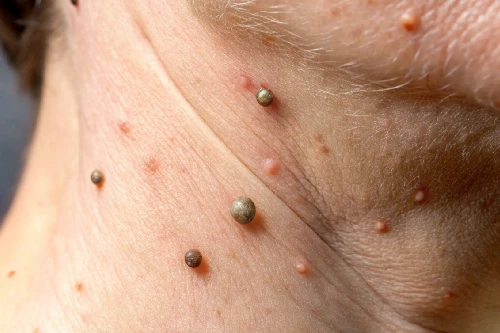
- Common warts (Verruca vulgaris)– These are rough hard bumps, ranging in size from pinhead to pea size. They may have black dots resembling seeds in their center which are in reality the smothered or dead blood capillaries. Mostly, they affect the hands and knees. They are caused mostly by HPV 2 and 4 but may even be caused by other strains like 1, 3, 7, 27, 29, and 57.
- Plantar warts– These are flat, often grown inward, with small hard lumps that can have tiny black dots on them. Mostly, they affect the soles of the feet, can grow large, and become painful when walking or standing. They are caused by HPV strains 1, 2, 4, 27, and 57.
- Flat warts (Verruca plana)- These are smaller, flatter, and smoother lumps than other wart types. They can grow in large numbers at a time, around 20-100 anywhere on the body. They are caused by HPV strains 3, 10, and 28.
- Mosaic warts– These appear as a group of white, tightly clustered, pinhead-sized warts on the hands and soles of the feet. They are flatter than plantar warts and are caused by HPV type 2.
- Filiform warts– These appear as long threads that stick out. They often develop around the eyes, mouth, and nose and are caused by HPV types 1, 2, 4, 27, and 29.
- Genital warts– These are off-white or grey, hard, and rough nodules that appear as grainy cauliflower. They are se-xually transmitted through skin-to-skin contact and mostly affect the penis, vulva, or the anus. Most of them are caused by HPV types 6 and 11.
Diagnosing Warts
Most warts are easily identifiable just by simple skin examination, looking at the skin growth. Rarely, a skin biopsy is performed to confirm a wart.
Wart Removal Treatments
Warts may resolve on their own but this takes years. Wart removal in Hyderabad is typically recommended when warts spread to healthy skin and mucosal tissues, cause discomfort, and disturb routine life.
The different wart treatment procedures include:
- Topical products– Salicylic acid containing gel, patch, or liquid can be applied repeatedly to dissolve warts layer by layer. A chemical cantharidin in liquid form may be applied to a wart to create a blister under the wart and cut off the blood supply. The dead wart can be removed by a skin specialist after a week. It is typically preferred for common warts.
- Cryotherapy– A liquid nitrogen is applied to the wart to freeze and wither off the wart.
- Immunotherapy– A topical chemical, an immune system stimulator, like DPCP and imiquimod, is often used to cause a mild allergic reaction which eventually makes the wart disappear as the immune system fights off the virus. It is typically preferred for genital warts.
- Laser treatment for wart removal– The laser-generated heat is utilized to destroy the tiny blood vessels lying within the wart. This cuts off the blood supply to the wart, thus killing the wart which eventually falls off.
- Electrosurgery– A specially designed heated needle is used to burn and remove the wart.
- Surgical removal– A sharp surgical instrument is used to cut out the wart.
Recovery After Wart Removal
Following the wart removal, the treated area may become slightly red and sore. A blister may perform in some cases as a normal part of healing. Eventually, it would dry up and form a scab or crust.
The recovery time after wart treatment is typically a few weeks. Warts completely disappear in about 2-4 weeks or even longer. However, with proper wart removal recovery, the healing period can be shorter and smoother and the treatment outcome can be optimal.
The post-treatment care tips include:
- Do not miss follow-up appointments
- Be gentle while cleaning the treated area.
- Shield the treated area from the sun’s harmful UV rays.
- Wear loose, comfortable garments or shoes, until the treated area entirely heals
- Refrain from picking the scab and scrubbing, scratching, or touching the treated skin
- Take enough rest and avoid strenuous physical activities or anything that heats the body.
Prevention of Warts
There is no fail-safe approach for preventing warts. One can lower the risk of catching an HPV infection, thus contributing to wart recurrence prevention.
Here are some preventive steps:
- Avoid physical contact with another person’s wart
- Avoid nail biting and picking at the nail cuticles
- Avoid sharing personal belongings
- Cover feet properly when using a public shower, pool area, or locker room
- Speak to your doctor about the HPV vaccine
- Keep skin well moisturized and protect fresh cuts/broken/wounded skin from being infected.
For those who already have warts, they can prevent their spread by following proper skin care for warts. They must do the following:
- After touching the wart, immediately wash your hands
- Resist the urge to scratch, pick, or rub the wart
- Cover the wart with a sterile dressing
- Avoid shaving over the wart
- Keep hands and feet clean and dry.
Get Help Today!
Although warts are harmless, benign skin growths resulting from HPV infection, their presence may cause embarrassment and impact daily life activities. That’s why those having warts sought after warts treatment in Hyderabad. There are varieties of treatment options available with dermatologists at Celestee Skin, Hair, and Laser Clinic for different types of stubborn warts like common warts, plantar warts, filiform warts, flat warts, genital warts, and mosaic warts. Schedule a consultation with a dermatologist for effective wart removal and personalized wart care.
FAQs On Warts Removal Treatment
What Is the Most Effective Treatment for Warts?
Consult with a dermatologist to know which is the most effective wart removal option for your case.
How Long Does It Take for Warts to Go Away After Treatment?
It may take weeks to months. The time depends on the chosen treatment option and the wart type as well as other individual factors.
Are Warts Contagious?
Yes. Warts can spread as they are caused by the Human Papilloma Virus. A healthy person can develop warts if having skin-to-skin contact with an infected person or contact with a contaminated object.
Can Warts Come Back After Treatment?
Yes, warts recurrence is possible, if the HPV remains dormant in the patient’s body and gets reactivated later. HPV has no cure.
Is Laser Treatment Safe for All Types of Warts?
Most warts including common warts, plantar warts, flat warts, and genital warts can safely and effectively be treated with laser.
Visit now at Celestee Skin, Hair, and Laser Clinic to get effective treatment for wart removal in Hyderabad provided by experts today!